

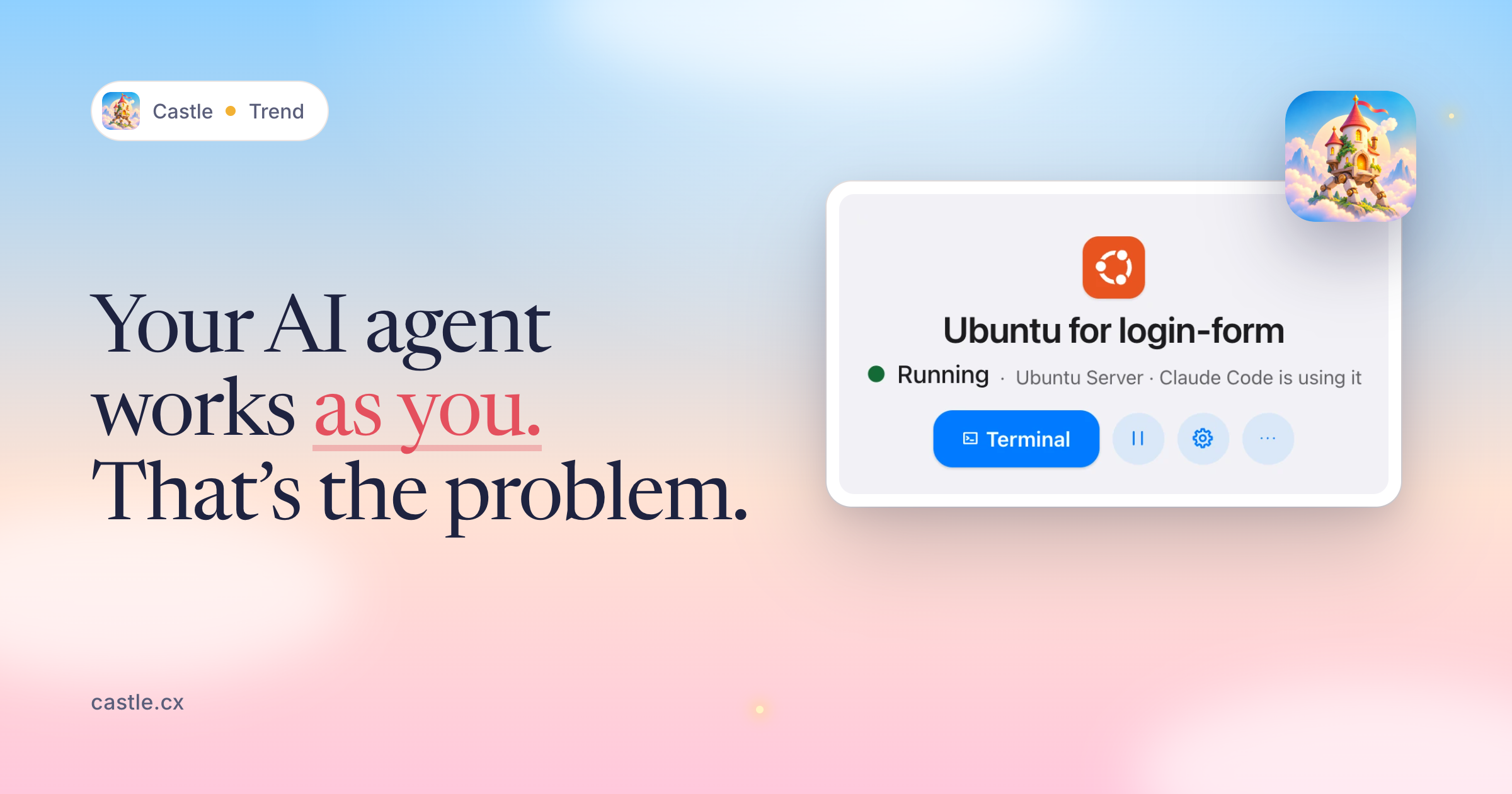
Remember when AI mostly answered questions? You asked, it replied, and your computer stayed yours.
These days the agent does the work. It runs your tests, installs packages and clicks through your apps. It keeps going while you make coffee.
Claude Code and Codex are the ones many of us use, and new ones turn up all the time. It's good, and it's a change nobody quite planned for.
Here's the catch. Where does the agent do all this? On your Mac, with your files, your logins and your open ports. As far as your computer can tell, the agent is you.
Think of a new contractor
Say someone new starts on Monday. Would you hand them your laptop, signed in to everything, and leave for lunch?
Probably not. You'd give them a desk, a laptop of their own, and access to what they need. Not because you distrust them, but because that's how work stays tidy and mistakes stay small.
Agents deserve the same, and they need it more every month. Their jobs get longer, several often work side by side, and one bad moment costs more than it used to.
What it costs you today
You've probably felt at least one of these.
- You end up babysitting. Give the agent full access and you hover. Lock it down and it keeps stopping to ask. Either way you're not off doing something else, which was the whole idea.
- Agents get in each other's way. Two of them rewrite the same config. Two installs fight over one simulator. One tidies up files another was still using.
- Mistakes land on your real machine. If an agent deletes the wrong folder, it deleted your folder, and there's no undo for that.
- Some jobs need a different computer. A Linux box to try a build. A clean Mac with nothing installed. An Android phone to test the app you just wrote. Most of us don't have those lying around, and setting one up by hand takes longer than the task itself.
"Can't I just use a virtual machine?"
You can, and plenty of people do. Apps like Parallels have done this for a long time, and they do it well. But they were made for a person: you create a machine, you sit in front of it, you set it up.
An agent works differently. Halfway through a task it decides it needs a Linux box or a phone. It has to ask for one, use it, and hand it back, without you clicking "New" on its behalf.
A computer of its own
Picture each agent getting a small computer of its own. It asks for one when it needs it and does its work there. The device rests when things go quiet.
You can watch it work, step in, or switch it off. And where the device can keep one, you can save a snapshot and go back to it if something goes sideways.
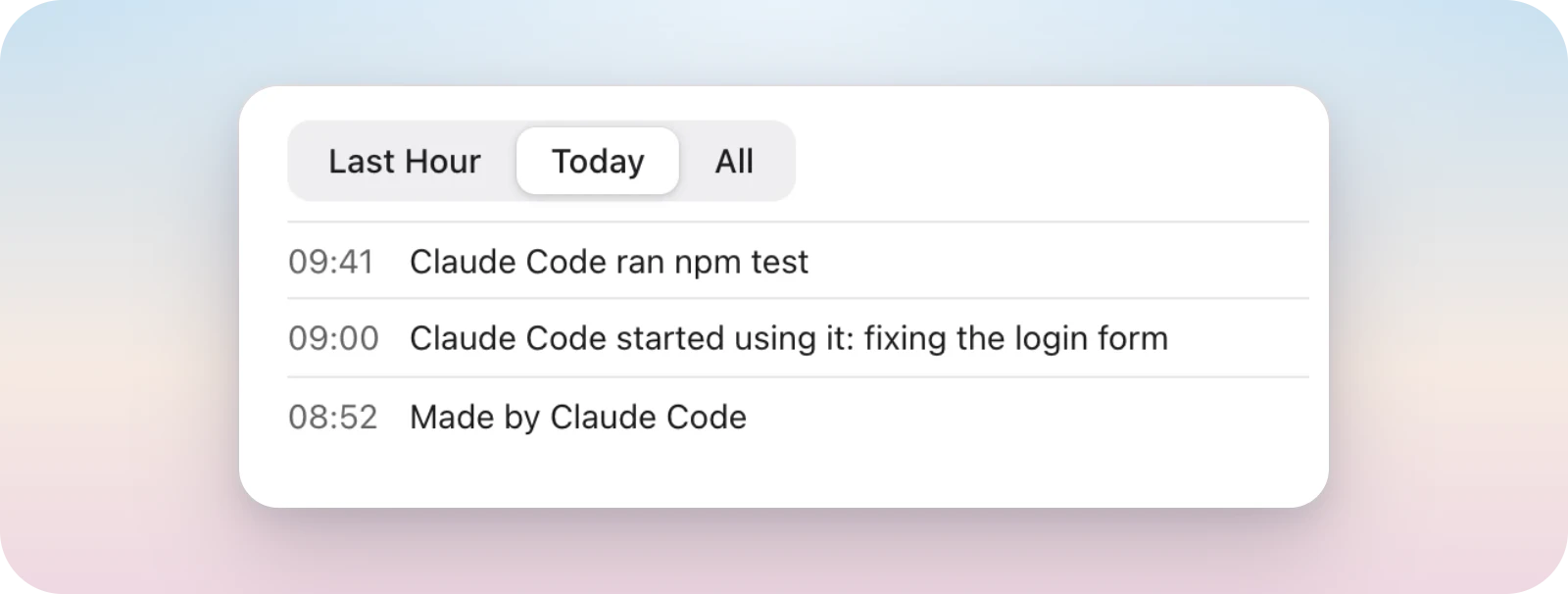 From Castle's design prototype. The app is in testing and may differ.
Say you ask Claude Code to fix the login form and head into a meeting. It asks for an Ubuntu device, runs the tests there and gives the device back. When you return, there's a plain list of what it did through Castle.
That's what Castle is for. It's a Mac app that gives AI agents devices of their own: a Mac, Ubuntu or an Android phone, made when the agent asks. A device is separate from your Mac, and it sees one of your folders only when you or your agent share it.
Want the short version of what you get? Here it is.
Castle is independent. It is not affiliated with Anthropic or OpenAI.